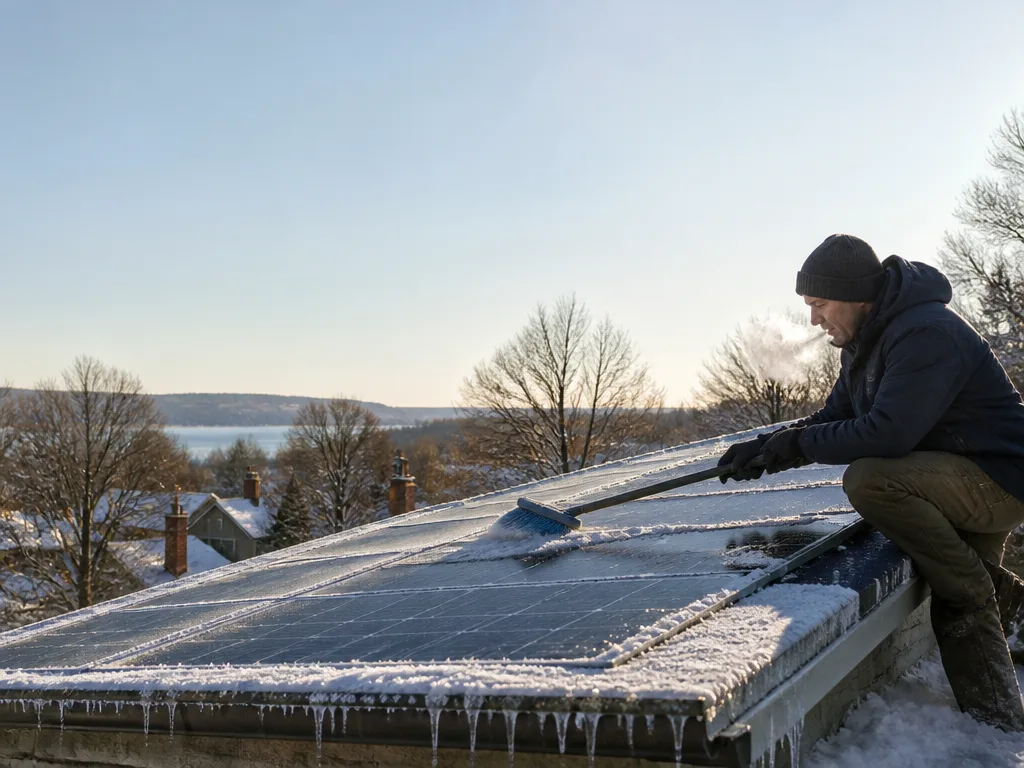
Winter hits solar systems differently depending on where you live. A panel in a snowy northern town deals with drifts and ice. A panel in the Southwest deals with cold nights and dust blown in on dry winds. Either way, the sun sits lower, the days are shorter, and your production numbers will drop. That is normal. This checklist from Solar Installation covers what to look at, what to ignore, and when to call our solar specialists.
Expect Lower Output and Know Why
The biggest change you will notice is in your monitoring app. Production falls in winter because the sun travels a shorter arc across the sky and hits your roof at a steeper angle. Fewer daylight hours cut the total even more. A system that made strong numbers in July may make a fraction of that in December, and that gap is expected.
Compare this month to the same month last year rather than to summer. If the drop looks similar to what your neighbors with comparable roofs see, your system is probably fine. Weather plays a role too. Several overcast days in a row can look like a fault when it is really just cloud cover.
Pull up your monitoring data once a week for the first month of winter. Note the daily totals on clear days. Those readings give you a baseline to compare against if something seems off later.
Snow and Ice: What to Do and What to Avoid
Snow on panels is often less of a problem than people think. Dark glass absorbs heat, and a light dusting usually slides off or melts within a day or two of sun. Heavier accumulation is different. Snow that stays for a week can block most of your output.
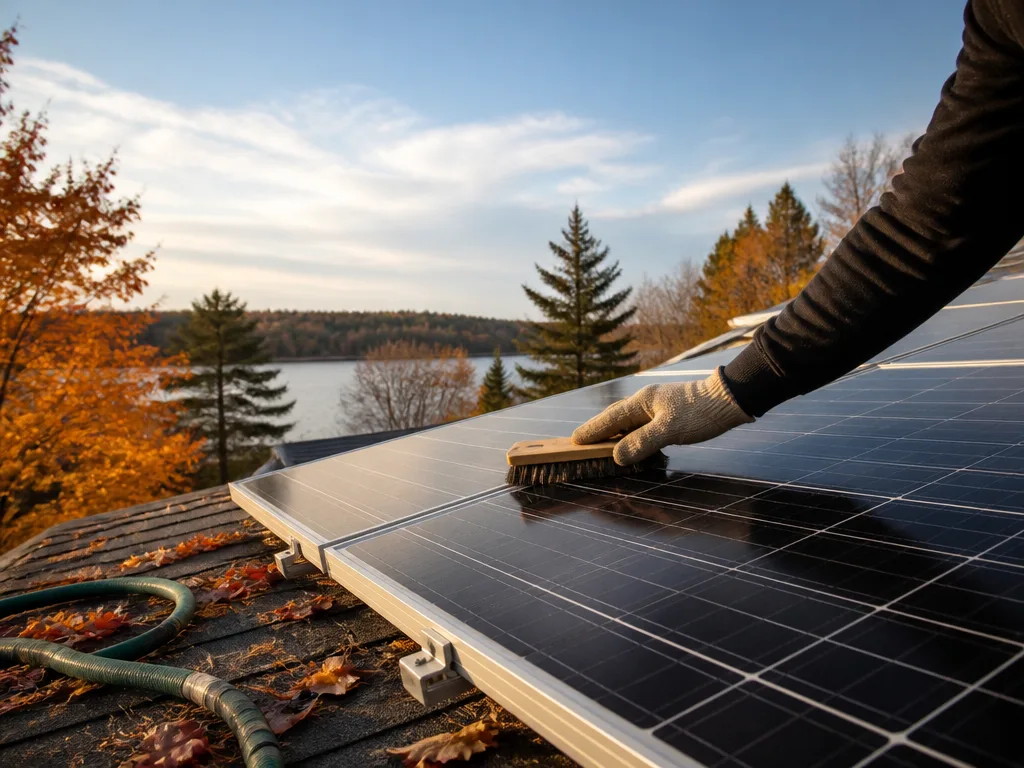
Never climb onto your roof to clear it. Ice, slope, and the weight of a person are a bad mix, and it is the most common way homeowners get hurt around solar. Use a soft roof rake from the ground if you can reach the lower edge safely. Push snow down and off rather than digging at the glass, and skip metal shovels or anything with a hard edge.
Watch for ice dams along the eave. Melt water that refreezes at the edge can back up under shingles and near mounting hardware. If you see a thick ridge of ice forming along the lower edge of the array, do not chip at it. Call our team and describe what you see.
- After a heavy storm, check that the array has not shifted or sagged.
- Look for cracked glass, especially after hail or falling branches.
- Confirm the inverter display shows normal status and no fault codes.
- Keep snow off the inverter area and the disconnect so access stays clear.
Check Your Roof and Mounts From the Ground
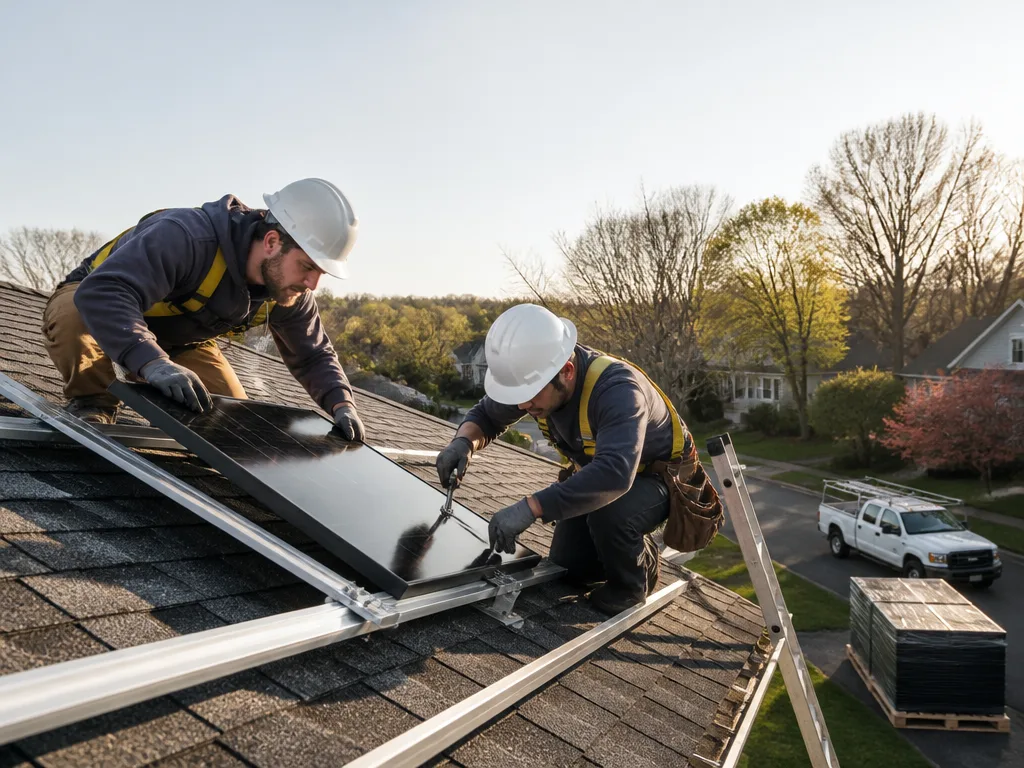
You do not need to get on the roof to do a useful check. Walk around the house with binoculars on a clear afternoon. Look at the rails, the clamps, and the lower edge of the array. Anything that looks bent, loose, or pulled away from the roof deserves a call.
Pay attention to the flashing where the mounts meet the roof. Winter freeze and thaw cycles stress sealant and roofing material. Staining, cracking, or a gap where the flashing lifts is worth flagging early, before a leak shows up inside.
Trim branches that hang over the array. Wind-driven snow and ice can drop limbs onto glass, and branches rubbing against the system wear down edges over time. Keep a clear margin of at least a few feet from any overhang.
Protect the Electrical Side
Cold weather is hard on wire insulation and connectors that were already stressed by summer heat. Once a season, look at the visible wiring runs, the conduit, and the junction boxes. Look for brittle jackets, pinched cable, or rodent chewing, which shows up more in cold months when animals seek shelter.
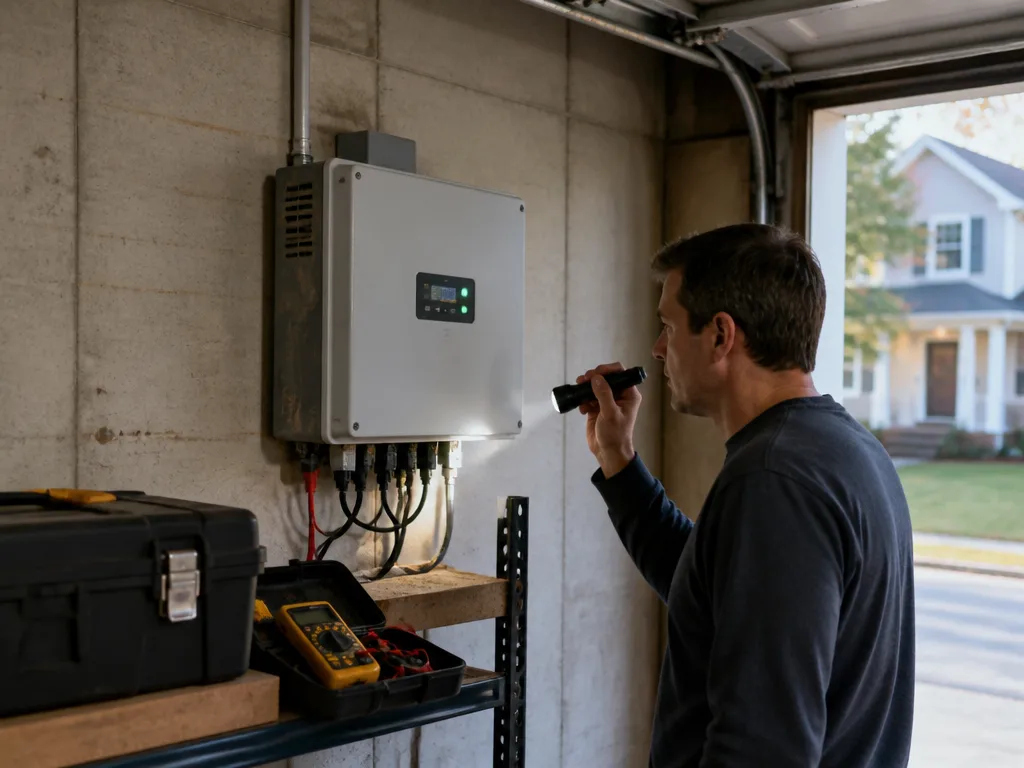
Keep the area around your inverter and battery, if you have one, clear and dry. Batteries in particular perform best within the temperature range listed in the manufacturer documentation. If your system sits in an unheated garage or shed in a very cold region, ask our solar specialists whether the enclosure needs attention before the coldest weeks arrive.
Do not open the inverter or any sealed electrical enclosure yourself. Log any warning lights, beeping, or repeated shutdowns, and call us with the exact message on the screen.
Plan a Late-Winter Service Call
Winter is a good time to schedule a service visit, because most homeowners are not running their systems at full output and problems are easier to spot in lower light. Ask our team to check connections, test the monitoring communication, and look at the mounting hardware while the roof is still cold and dry.
Solar Installation handles this kind of visit nationwide, with local crews in every region we serve. You can reach us by phone to set up a time, and our team will tell you what to expect before anyone heads out. If a visit turns up something that needs work, our solar specialists will walk you through the options in plain language so you can decide what makes sense for your home and budget.
Keep this checklist on your fridge or saved to your phone. Revisit it at the first thaw, when the days start to lengthen and your numbers begin climbing again. Winter output is a temporary dip, and a few minutes of attention now keeps your system ready for the season ahead.